Wednesday, May 31, 2017

The Iraq Video


This is it. The 5 minute video we've been working on since we got back from Iraq. Made with deep thanks to the team at Exposure International. Tune in close, turn it up and let it move you like it did me. To learn more about Tutapona you can visit www.tutapona.com

#wewillbehealed


Wednesday, May 10, 2017

The 20 images of South Sudanese refugees I can't forget.

 I promised you photos - so here they are! The 20 images I cant forget and that mean the most to me from my recent trip to the border of South Sudan. I was there with Medical Teams International, Food for the Hungry and Tutapona for TearfundNz’s East Africa Crisis Appeal. If you missed the blog I wrote about my experience there gathering stories and images of the refugees fleeing both war and famine - you can check that out here. But if these images move you at all, let them move you to action. You can donate to Tearfund's appeal right now, right here.

A little South Sudanese baby is given polio drops as he arrives at the border crossing in Uganda.

A young girl finally makes it to the front of the line for food distribution and hands over her ration card. 

I will never forget this woman. She was brought into the camp hospital run by one of Tearfunds Integral Alliance partners by her relatives after fleeing the famine in South Sudan.

I will never forget this woman. She was brought into the camp hospital run by one of Tearfunds Integral Alliance partners by her relatives after fleeing the famine in South Sudan.

“I remember the evening when the war broke out in South Sudan. There were a lot of gun shots. We could not sleep at home so we had to run away to look for a safer place. During that commotion, my husband got lost because we were running amidst confusion. I managed to escape with our five children to the border of Uganda and we were brought to a refugee settlement. Life was extremely rough and I could not sleep at night thinking about my husband whom I have never seen up to date and that continued to torment me day and night. I had no appetite and nightmares of what I saw while running with my children. My children also were heavily affected by what we saw on the road on our way to the border of Uganda. My children hardly sleep at night. One day I attended a program (run by Tearfund's partner). Ever since then I've learnt a lot and my life has changed. I've learnt to let go of the past hurts in my life. Most importantly the program gave me hope. Now I feel much better than I used to". Tearfund is providing trauma counselling to victims of war and refugees like Mary.

The line waiting for food at one of the South Sudanese refugee settlements in Northern Uganda 

This man reminded me of my Grandad....it was so deeply sad to see him at a refugee settlement at this stage of his life.

This little boy is given a drip to help him recover from malaria

Nutritional screenings at the border crossing for malnutrition. I think this boy's ok...:) 

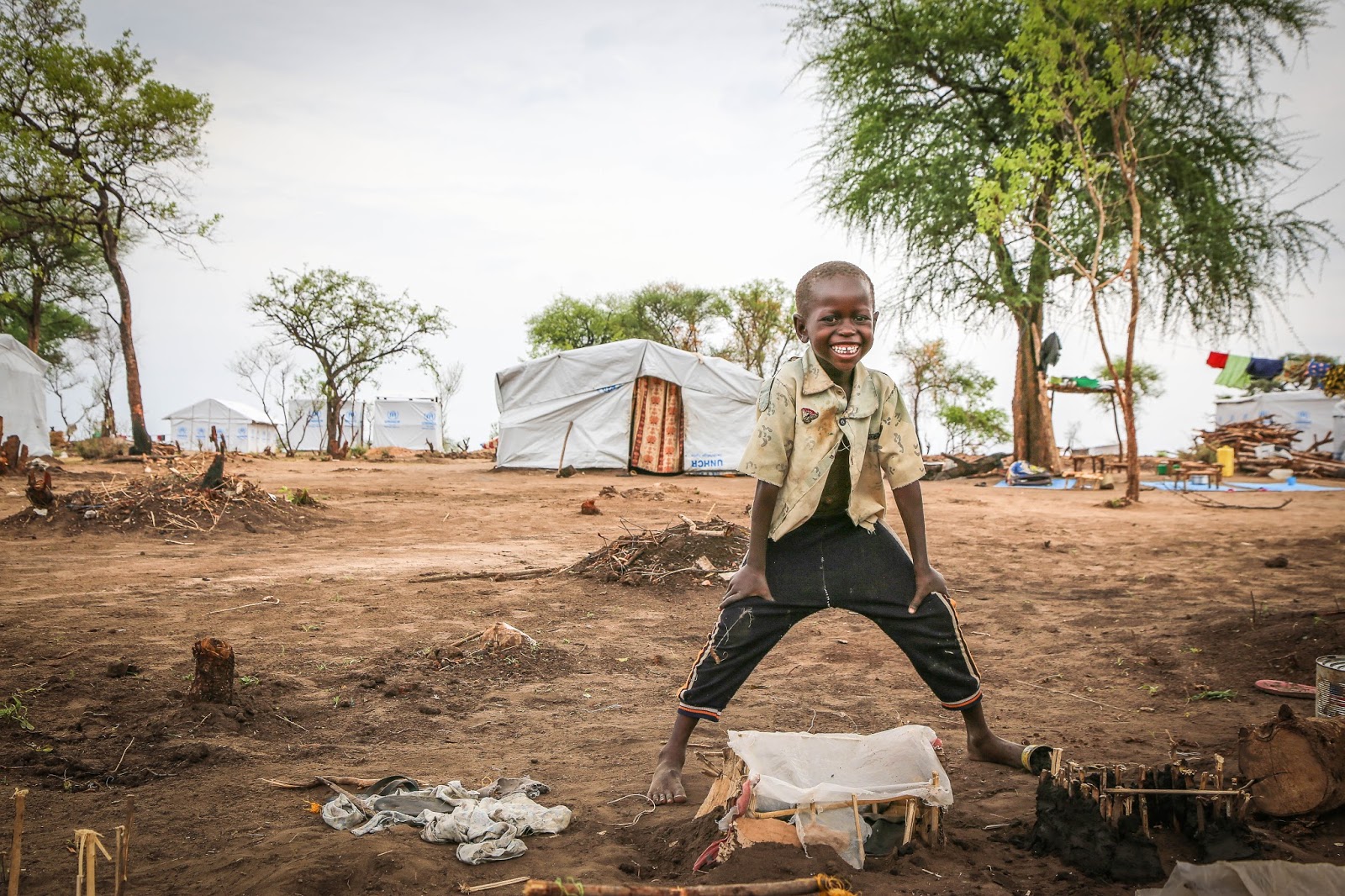
A typical house in a South Sudanese refugee settlement.


This little South Sudanese girl is at the border crossing in Northern Uganda sitting atop her families belongings as they wait to be moved to the reception centre where they will register as refugees and begin their life in Uganda. 

“I have seven children aged 3-10 years old. When the war broke, we had to leave very quickly. We saw many dead bodies as we fled. My children and I also saw many people lying on the side of the road screaming as they were in the process of dying. I had to keep going in order to save myself and my own children. As we fled to Uganda, my husband disappeared. My brother is also missing. We don’t know if they are dead or alive and it’s been nine months now.” Ayenyo, South Sudanese refugee living in Uganda

“My name is Mary and I am 42 years old. There was war at our place in South Sudan and that war killed my husband so my five children and I fled here in 2013. We came in trucks with the UN and were taken to this settlement. My children are aged 4-14 years and have had no education since then. We live in nothing more than sticks and a UNHCR sheet because we have no-one to help us build a house. I have two children with mental problems who have never spoken since they were babies. I wish there was a medicine that could help them. I do not know why they were born this way but I think they both have the same thing. We have no money to help them so they stay as they are. I feel so vulnerable here with just myself and my children. How could we ever go back to South Sudan? We don’t have anything else to do each day other than wait and hope that our food distribution comes at the end of the month for the next month. I don’t know what my future holds. I don’t know what I’m going to do.” 

A typical house and 'kitchen' in the settlements

Make-shift medical clinics and the doctors who staff them are incredible. 

Taking a moment to rest in the refugee reception center 

Taking a moment to rest in the refugee reception center 

Taking a moment to rest in the refugee reception center 
Waiting

Kids will be kids. This little boy plays in the dirt outside his house making sandcastles that resemble his home (behind him).


What is Tearfund doing?
Tearfund and their partners have been working in East Africa for decades providing lifesaving humanitarian assistance and basic emergency needs to the most vulnerable people affected by this crisis.  But their resources are stretched to capacity and they desperately need more people to come alongside them. I can’t tell you what it feels like to have to turn away a mother and child or a desperate father simply because we don’t have the funds. 

We want to help South Sudanese refugees fleeing into Northern Uganda by: 

1) Over the next three months, sending in 2,950,000L of water to help people living on only a small amount of this vital element.

2. Providing trauma counselling to some of the thousands of traumatised refugees.
How can you get involved?

1. They need your prayers. Our weapon of warfare against all that is unfair, unjust and wrong in this world, is prayer. Prayer moves mountains, and we need to constantly lift up the people of South Sudan and Somalia in our prayers.
2. They need your money. We're asking our supporters and anyone who cares to show  with their actions that the people of South Sudan are not alone. We see them. We hear their cries and we can and will do something to help.
Final thoughts
 No matter how much we want to, we can’t fix the drought. We can’t fix the war. But we can help those who are affected by them. I read a quote years ago I’ve never forgotten; now seems like a good time to share it. “Sometimes I would like to ask God why he allows poverty, famine, and injustice in the world when He could do something about it, but I’m afraid He may ask me the same question.”
Please join me in giving to our East Africa Crisis Appeal today.
https://www.tearfund.org.nz/East-Africa-Crisis


Tuesday, May 2, 2017

Why a mother with two young children at home chose to go to Iraq

Let’s talk about Iraq shall we? That little chestnut. I can see by some of the comments and private messages I’ve received that some of you are wondering why on earth a mother with two young children at home would choose to go to a place like Iraq.  So I’d love to tell you why I went, what it was like and what I was doing there.  (All photos from my iphone5 - 'real' ones to come end of May once campaign is live).

Why I went?
Because I believe in a God whose heartbeat is for the hurt, the lonely, the hidden places and the forgotten millions. And I want to spend my life doing whatever I can to shed light on these people and their stories by coming alongside the incredible organisations working beside them. But the other reason is for my daughters. I want to raise brave, compassionate, kind girls.  I want them to know that the world does not and will not revolve around them. I hope in some small way, the choices I make in this realm encourage them in their journeys.  I’m not going to lie, I was quite scared - and at one point even shaking on my trip. Deciding to go was a complex decision for us to make but ultimately we believe one Tim and I took an educated risk on.

A gorge on the way to Soran, Kurdistan
 What’s Iraq like?
Since I was a little girl I remember hearing about a country called Iraq. It was a place of war, danger, uncertainty, crimes against humanity and a bad guy called Saddam Hussein. As I grew up this view was re-enforced by countless news stories that flash before my eyes even now. Suicide bombers, shootings, people setting other people on fire, air strikes. And for sure, that’s a deeply sad part of this country’s history. But it’s only that - a part.  And I was embarrassingly shocked to discover that other parts exist. For starters, Kurdistan in Northern Iraq is outrageously gorgeous. It’s rolling green hills, rocky mountainsides and humble houses nestled in the foothills are beautiful to behold. If you can imagine a childhood Bible with pictures of Jesus on the mountains giving a sermon – it looks like that! A local theory is that this is where the Garden of Eden used to be and as I drove past some of the most beautiful waterfalls and gorges and the Tigress River, I could see why. Though apparently it snows in winter and gets up to 52 celcius (125 Farenheit) in the summer!
A Shepard watches over his sheep in Duhok, Kurdistan


Kurdistan, Iraq is a land where families picnic by the river throwing stones to see how many hops they can make on the surface, a land where they sit close on the couch watching movies together till late at night. A land where the whole family, sometimes up to 100 of them will feast together and dance till they can dance no more. A land where the grandmas hold more respect and influence than you could imagine and the men care deeply for their children. And the women, oh the women. They are strong, hard working, kind, brave generous and most of all, resilient.   

Sunset Soccer in a refugee camp in Iraq


They have malls, KFC and Hardees (yes, I indulged in my first burger in Lord knows how long). They have theme parks and I drove past at least four ferris wheels. Both adults and children go to bed late and sleep in (11pm-10am ish). They love to eat out at restaurants and the hummus, shwarma and kebabs they make are both cheap and delicious. If you find a Western style bathroom you have to put all your toilet paper in the trash can beside it and not down the toilet. You must have your elbows and ankles covered at all times, and don’t even think about showing the bottoms of your feet in public.  


What was I doing there?
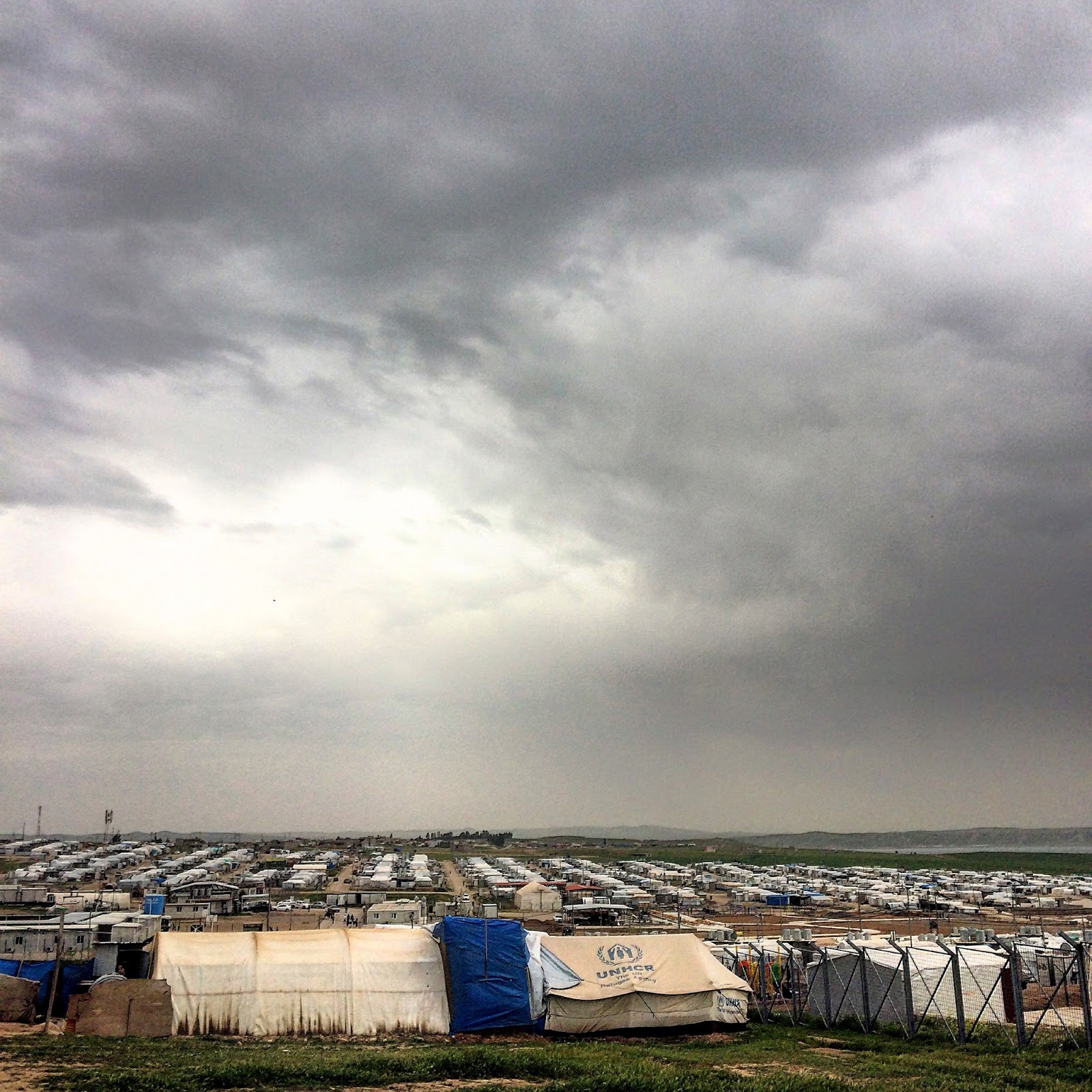
One of 27 camps in Iraq
I was in Iraq with Tutapona (trauma rehabilitation for victims of war and refugees) for seven days to help them tell the story of the people they serve and how they come alongside them. We were making a video with the amazingly talented and generous team at Exposure as well as capturing stories and images we can use for this years Summer Appeal.  Tutapona has their work cut out for them. In Iraq alone there are over 1 million IDP’s and refugees.  These people are usually fleeing ISIS in the Mosul/Sinjar area or are Syrian refugees. They come to one of the 27 refugee settlements in Iraq and it is here Tutapona comes alongside to provide trauma rehabilitation services through their 11 staff members. They start by providing a two week group trauma counselling program and then proceed to one on one counselling as needed. Tutapona is grateful to work alongside their partners, Samaritans Purse, The Refuge Initiative, World Orphans Project and The A21Campaign. I also spent one day with Tearfund New Zealand’s partner, MedAir who are providing non-food items, basic supplies, shelter, household items and medical services.


The main street of Sinjar Town

But it was the trip to Sinjar that really hit home for me. I’ve never seen anything like it in my life (video is at the bottom of this blog). On August 3, 2014 ISIS invaded a beautiful town and all the towns surrounding it on the Syrian border called Sinjar. They came at night, destroyed everything in sight and then divided the remaining men, women and children into sections. 6,000 died in a day. The lucky ones escaped to the mountains behind them only to find themselves trapped with no water or food and surrounded on either side. 

The moment that had me undone.
A burnt out car and the clothes beside it
As we drove up the mountain burnt out cars lined the road. But beside them was what had me undone. The clothes. The shoes. The medicine. All left untouched for the last two and half years. Apparently ISIS would pull everyone out of the vehicle as they tried to go up the mountain, make them all take off their clothes, kill them and then torch the car.  I found a mother’s dress, a little girl’s dress and a shoe in one spot and it was all I could do to pull myself together.  The horror had hit home. They died on this mountain. As for those back in the village, the men were either murdered on the spot or forced to fight for ISIS. The women were taken as sex slaves into Syria or Mosul and married off to ISIS men. Their children were taught to become fighters often asked to cut off their Barbies heads, a chickens head and at ten years old, an “infidels” head. Any females over the age of 8 were fair game for rape.

The main street of Sinjar town
I interviewed many women who had only recently escaped, been rescued or bought back from captivity. I was a stranger to these people but on the strength of the Tutapona staff’s deep companionship with them I was greeted with trusting kindness and gentle smiles. Their stories are horrific and I will be able to share parts of them in due time after our appeal goes public. Stories about how their seven year olds were given grenades as birthday gifts, their fifteen year olds forced to put on a suicide vests, get in a car and then blow themselves up. Perhaps worst of all is knowing how many of their family are still in captivity. One mother wept as she told me of her 13 year old daughter being ripped out of her arms by her hair and taken by ISIS. Another mother has a little girl who is four, all alone and still in captivity with ISIS. She doesn’t know if they’ll ever be reunited. Most have lost their husbands, unsure if they’re alive or dead.  Their homes are rubble, their lives as they know it – over. Their trauma was deep and palatable. Their tears flowing from a place I’ve never known.  And the children we spoke to…. don’t even get me started. The need for Tutapona to expand their reach is critical. The suicide rates in the camp are at an all-time high and depression, anxiety and conversion disorder is the norm. Although food, water and shelter are being addressed – it’s the deepest parts, the unseen grief that is killing them slowly.


Final thoughts
A classroom in Sinjar town 
Over the years I’ve sat with many poor mothers and fathers as they’ve shared their stories of surviving war, humiliating rape, torture, slavery, abuse and the murder of loved ones. The pain they describe is unfathomable and horrific. Before I started doing humanitarian photography/storytelling, my honest mental temptation was to imagine that people who endured such things ‘on the news’ are somehow fundamentally different to me. Maybe, somehow, they just don’t feel things like I do. They’re “used to it”. Maybe they expect less, care less, hope for less, want less or need less.  But painfully, over time, I have seen that they are exactly like me. And what they endured on a mattress or what they endured as they fled for their lives up a mountain is in no way easier for them because they are poor. This Summer, Tutapona is giving us an opportunity to come alongside, to show that someone, somewhere hears them, cares and is going to do something to help.  I’ll be getting behind that.


Video of the main street of Sinjar Town


Wednesday, April 19, 2017

Ethical Fashion Report 2017 - How did your favourite brands score?

For the last six months, my colleagues and I at Tearfund in New Zealand have been working on this. The Ethical Fashion Report for 2017 ranking both New Zealand and Australian brands (242 of them) from from A to F on the levels of visibility and transparency across their supply chain with regards to worker rights, policies and practices.One of my favourite magazines, Good Magazine did this awesome write up that does an amazing job breaking down the report. You can read it here.  But if you've only got a minute or two....here's my key takeaways including one on kids clothing. And if you want to go straight to the source and download the full guide or the full report - go here.


Saturday, April 15, 2017

An open letter to our newlywed selves - 10 years on.


This morning I woke up after a rip roaring night listening to the local club down the road pound their baseline so hard it took my fan on full speed and two ear plugs to stop my stomach reverberating to the beat. I then switched off said fan, and walked down the hall to my daughter’s bedroom to find her playing in her room quietly. I moved to the next room to find Eva – not there – no surprise. She’d managed to get out into the lounge and was wandering around without a diaper and a spoonful of Vaseline she was feeding herself. Tim, who had kindly let me sleep in till 7am popped his head around the corner, gave me a smooch and said, “Happy 10 year Wedding Anniversary Babe.” And it hit me. I’ve been married a decade to this man. How the heck did that happen? How on earth did I end up in the middle of Africa, with two little girls living this chaotic but wonderful life? All at once the memories of a decade flashed before my eyes. Oh what I wish I knew back then.

And then the thought struck me, what if I could go back? What would I want to say to myself? What would I want to know? So I’ve decided to write a letter to my newlywed self  in the hope that somewhere, somehow, someone  would find a teeny tiny bit of wisdom from a wife that’s been there, done that and lived to write the blog. Because exactly 10 years ago at this precise moment I walked down the aisle and said, I do, and I wished someone had told me the following.

Dear Helen,

1)      Let the man be. Your husband is an ‘ambivert’.  He both enjoys time by himself and time with others. But every now and then he really needs time alone. This is not a bad thing. This is not a reflection on you. This is not a reflection on your marriage, or “the end of your marriage” as you dramatically put it. It is how the good Lord made him. So, let the man be! Don’t be texting and calling him while he’s doing his thing. Stop asking him to come home early from work/fishing/hunting/beer nights/rugby games and so on. Stop with the whining. You’ll be married about 7 years before you have kids. After kids, he will do next to none of this and you’ll wish he could! Don’t be stealing his joy. This season is a short one and he deserves a break. From you. To be blunt. You’re quite annoying.

2)      Go on adventures with him. This man of yours is at his core, an adventurer. He’s going to suggest things – wild things, things you’re going to want to instantly dismiss. Things like “Let’s move to the Middle East” or “Let’s move to Africa” or “Wanna walk around in the game park and sneak up on some elephants with me?” But when you day after day, month after month, year after year say no, you’ll be killing the creative, imaginative spark inside. Say yes baby, say yes. Not all his ideas are good ones, but the best years of your life will be the ideas you say yes to. Go to Amman, Jordan, let him hang the decapitated deer in the garage, let him build a fire pit out of your old washing machine – why the heck not? He’s weird. Embrace it.  Just make sure you’re wholeheartedly into the adventure – exactly 50/50 to be precise or you’ll blame him for every little thing that goes wrong.
 
3)      He wants your respect more than your love. When you are disrespectful, you wound him deep. That kind of undermining, mean spirited chat is bad. Real bad. He holds onto those words, mulls them over and thinks about them far more than you realise. When he brings them up weeks later you’ll feel terrible knowing the last few weeks have been a mess for him simply because of your careless choice of words you’ve long forgotten (and didn’t mean).

4)      Be his biggest cheerleader.  Encourage him to dream that dream he’s meant to dream. Encourage him to run after his passions. Support him in the endeavours that set his soul on fire. Don’t squash him. He’s got so many gifts and talents that God’s placed on the inside of him and he needs you to help bring them out.  Nurture that like only you can.

5)      Tell him what you want. If that means you need to write a list of what success looks like to you on your birthday, in terms of how many presents, what you’d like to eat and where you’d like to go then you do that hunni. This is not a guessing game. This is your marriage and if you want it to be good, be straight forward.

And because marriage is a two way street here’s Tim’s two cents.


Dear Tim,
1)      Your wife is going to ask you to write something in ten years’ time about what you’ve learnt in ten years of marriage to her. This is going to annoy you, but you will do it because you love that little firecracker of a wife and she currently lives in Africa with you.

2)      You feel uncomfortable whenever she’s driving now. You’ll still feel uncomfortable in ten years. Trust your instincts on this one.

3)      If you want to eat anything other than packet macaroni and cheese, vegetable lasagne or chicken salad - learn to cook.

4)      You’re marrying an incredibly energetic, talented and creative person who has lots of ideas.   She has a lot to offer in an important area so you need to build her up. Don’t hold her back, instead encourage her and watch where God leads.

5)      You have a God loving, beautiful and driven woman who is willing to marry you. What an incredible gift. Be thankful for that.

DISCLAIMER: We don’t presume to know anything about marriage. Really, we don’t. But we do know a little about our own marriage, in our own context. And that is all. 


Monday, March 20, 2017

A stark contrast

This week I traveled up to a small dusty, hot town in Northern Uganda called Adjumani with Helen and our girls. Both of us had work we needed to do up there, but not enough time to take separate trips, hence the decision to take Hope and Eva. It was a decision that I quickly regretted. Eva winged through the short flight and the moment we landed we all began to sweat profusely. The temperature was somewhere in the late thirties and our hotel turned off the generator at midnight, so off also went the fan. The girls simply couldn’t sleep, not having been in heat like this before, so of course Helen and I didn’t sleep either. I lay there feeling frustrated about all manner of things until morning. Then I had to go to work. Interestingly, by the end of the week I was glad we’d taken our girls with us. I think in a very small way it helped me to relate to what we saw.

On our first day I spoke to a young boy of perhaps 11 who said he and his siblings and mother had walked for 3 weeks to escape from South Sudan. That’s fairly typical. Many of the oldest and youngest are dying on the way from a lack of water, shelter and food. Internally, I feebly related that to my arduous hour-long flight. Self constructed, tarp-covered stick shelters are the accommodation option out there in the settlements. Blazingly hot in the day, less than rain-proof and small. As we walked through them I considered that their occupants were not camping, these were their homes for the foreseeable future. The war in South Sudan is showing no sign of letting up.

These refugees don’t have jobs to go to when they wake up in the morning. Helen pointed out to me a man lining up for food in one of the reception centers who would have been about the same age as my dad. As I tried to imagine what this would be like for him my mind balked. Most of these refugees were poor back in South Sudan but now they’re poorer. They have walked away from their land and houses and have had to leave behind the possessions they couldn’t carry. No prospect of self-sufficiency for a long time ahead for the man in the queue. Instead he has to put out his bowl and accept what is given. 

A mum that we interviewed had lost one of her children in the fighting. As she said it, I let the weight of that sentence sink in for a moment. What mother should have to lose a young child in some senseless war? What would my response be if one of my daughters were shot? No time to grieve for this lady, until she was an alien in a foreign country.

At our last location Quinn Neely who was doing some filming for us put up a drone to get some aerial footage of Palorinya refugee settlement. Looking at his screen as he filmed from a couple of hundred meters up gave an insight into the scale of this migration. Clusters of shelters stretching out for miles and miles along the banks of the Nile River. Each individual shelter holding a little family, but on the screen they were simplified down to thousands of tiny white dots. This one settlement currently holds 142,000 people and it opened 3 months ago, in December. Had the drone been able to climb higher, it would have picked up the 5 settlements of South Sudanese refugees spread out across Northern Uganda holding over three quarters of a million people. Still South Sudan’s leadership can’t sort their differences out and a bit north of where we stood about 2,000 more people

cross the border each day. My way of relating to that number is to think of my high school, Macleans College, daily walking into Uganda. This has been happening now for 9 months.

As we left, I understood more fully what an immense privilege that is. We can leave. These people are in Adjumani right now because they have, in the words of Leonardo DiCaprio in Blood Diamond- 'no choice'. They cannot go home after a few days, and they have nowhere else to go. They have no idea if they’ll ever be able to go home. Home may well have been altered irreparably.


As I write this, I’m sitting in a beautiful house in Kampala with my family intact and safely with me. I have a job. I have choices. What stark inequality. I’ve worked in this space for a few years now, but this week I was hit anew by the gulf between the life of a refugee and mine.

Tim